Late-match seizing arrives at changes of direction rather than at rest, which points at a fatigued control system rather than a drink.
The cramp that ends a five setter is not really about salt
ADVERTISEMENT
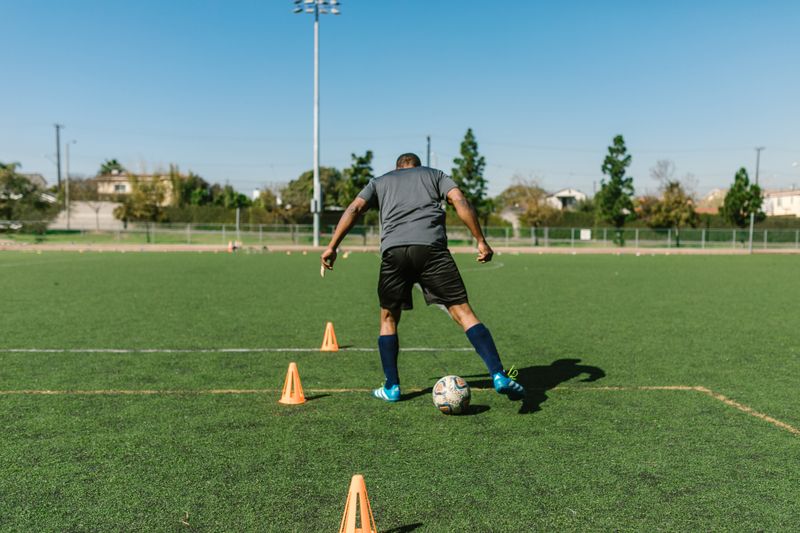
Notice when the cramp actually hits. It is almost never while a player stands at the back of the court between points. It is at a lunge, a stretch for a wide ball, a push off out of the corner, and usually in the muscle that was already working hardest.
That timing is the argument. A pure fluid and salt explanation would predict cramp appearing when the losses are largest, spread across the body, and getting worse in the heat regardless of what the muscle is doing. What players report instead is a specific muscle, at a specific moment, in a position where it is both shortened and being asked for force. The calf while pushing off with the heel already up. The back of the thigh at full stretch. The arch of the foot at the end of a slide.
The better mechanical account is that the nervous machinery controlling the muscle loses its balance. Muscles carry sensors that report tension and length, and the signals from those sensors are what keep firing under control. Fatigue makes the excitatory side louder and the inhibitory side quieter, and once that balance tips, a muscle contracting near its shortest length can lock on and refuse to release. That is exactly what a cramp looks like from outside: a muscle stuck, painfully, and released when you stretch it, because stretching feeds the inhibitory sensor.
Which explains the one intervention everybody has seen work on court and nobody can explain with electrolytes. Pull the toes up and the calf lets go in seconds. No fluid crossed a membrane in that time. Something in the control loop was reset.
None of this means hydration is irrelevant. Being flat on fluid raises fatigue for the same work, and more fatigue means an earlier tip of the balance. But treating cramp as a drinks problem leads to players pouring salt into themselves in the third set and being surprised when it happens anyway.
The honest prediction is duller and more useful. Cramp arrives in the muscle that has done the most repeated near-maximal work, in the position where it is most shortened, at the point in the match where the control system is most tired. Prepare the specific movement and you move the threshold. Prepare only the sweat losses and you have addressed a contributing factor and left the mechanism alone.
📊 Community Poll
Is ice hockey the fastest team sport in the world?
Related Articles