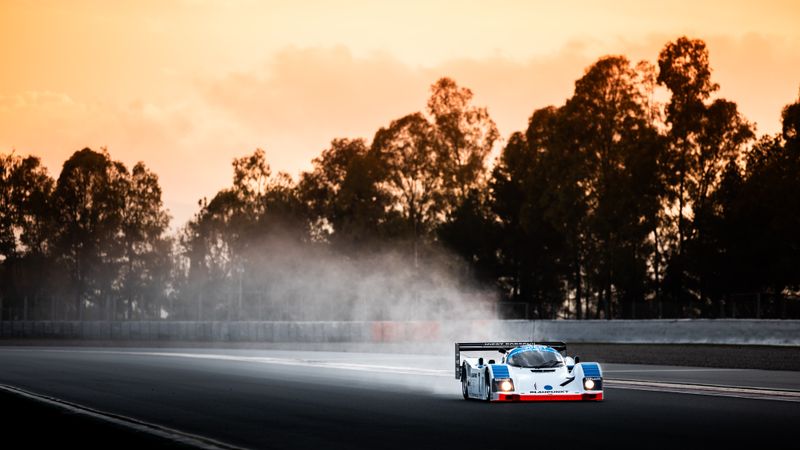
Defending in a braking zone is governed as much by unwritten paddock understanding as by anything printed in the sporting code.
The one move rule is a convention stewards apply unevenly
ADVERTISEMENT

One change of direction to defend, then take up your line. Every driver can recite it. Almost none of them can tell you exactly where it is written, because for years it was not written anywhere, it was a note in a drivers' briefing that hardened into custom and was later gathered up into guidelines that keep being revised.
That history matters, because a convention is enforced differently from a law.
The braking zone is where it bites. A defender moves once on the straight, which is allowed, and then adjusts under braking to protect the inside, which may or may not be a second move depending on how far the car travelled, whether the attacker had a wheel alongside, and whether the panel that evening reads a lock-up as a mistake or as a manoeuvre. All three of those tests have been applied in the same season. Drivers know it. They arrive at a race asking their sporting director which interpretation is in force this weekend, and that question should embarrass the sport more than it does.
The guidelines were meant to fix this. In some ways they did, by defining when a car is considered alongside and what part of the corner has to be left available. But guidelines that describe geometry cannot describe intent, and the incidents that generate arguments are almost always about intent under braking at the limit of adhesion.
Here is my position. Consistency matters more than getting each individual call right. A slightly permissive standard applied identically everywhere produces cleaner racing than a theoretically correct standard applied by rotating panels who have not adjudicated together before.
The rotating panel is the mechanism nobody wants to talk about. Stewards change from event to event. They bring different racing backgrounds, different tolerance for contact, different instincts about who was at fault. A permanent panel would be expensive and would attract accusations of bias, which is presumably why the sport avoids it, but the price of avoiding it is a rulebook that drifts week by week.
Drivers adapt, because they adapt to everything. They defend harder at events where the panel has a reputation for leniency and they leave more room where it does not.
That is a sport being officiated by rumour, and it has been that way for a long time.
📊 Community Poll
Is ice hockey the fastest team sport in the world?
Related Articles