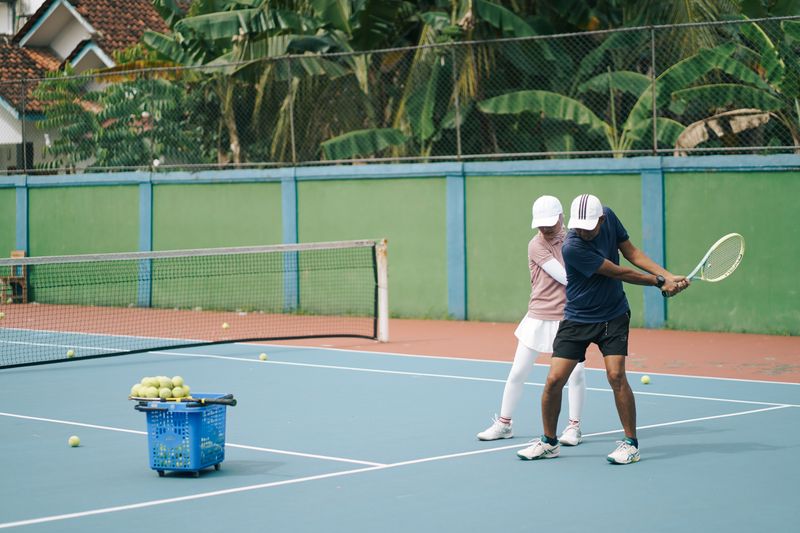
Arching back and then snapping forward loads the trunk muscles opposite the racket arm, which is where they let go.
The serve tears the abdominal wall on the wrong side
ADVERTISEMENT
When a player pulls up mid-service motion and grabs at his side, the injured muscle is usually on the side away from the racket. That surprises people every time, and it is the clearest clue to how a serve is actually produced.
Think about what the trunk does. The body arches backwards and rotates away from the target so the racket can drop behind the back. To get out of that position, the abdominal wall on the front and side has to contract hard while it is still being stretched, pulling the ribcage forward and rotating it toward the target. The muscles doing that work are the ones running down the front and along the flank, and the ones on the non-dominant side are in the most stretched position at the moment the effort begins.
A muscle producing high force while lengthening is the standard setup for a strain in any sport, and this is a textbook version of it delivered a hundred times a match. The tissue involved is the deepest of the abdominal layers, low on the flank, and it fails right where the muscle becomes tendon.
Two things make it worse and both are common. One is the kick serve, which increases the arch and the rotation, so the stretch is deeper before the contraction starts. The other is a sudden jump in serving volume, which is why these injuries cluster after a player returns from a break or arrives at a tournament with a new serve to try out. The tissue does not have an early warning system that a coach can see, and the first sign is often the tear.
What frustrates me about the way these are discussed is the framing of core strength as a general virtue, as if any amount of trunk work protects any movement. It does not. The relevant capacity is force production at long muscle length under speed, on one side, in rotation, and that is a specific thing to train and a specific thing to lose.
The recovery pattern is the giveaway. Players come back able to hit groundstrokes for a week before they can serve at all, because groundstrokes never place the same muscle in the same lengthened position at the same speed. Only the serve does, and it does it every single point.
📊 Community Poll
Is ice hockey the fastest team sport in the world?
Related Articles