Late-match velocity loss almost never starts in the shoulder, and the giveaway is where the ball is struck rather than how hard.
A serve slows down from the legs up
ADVERTISEMENT
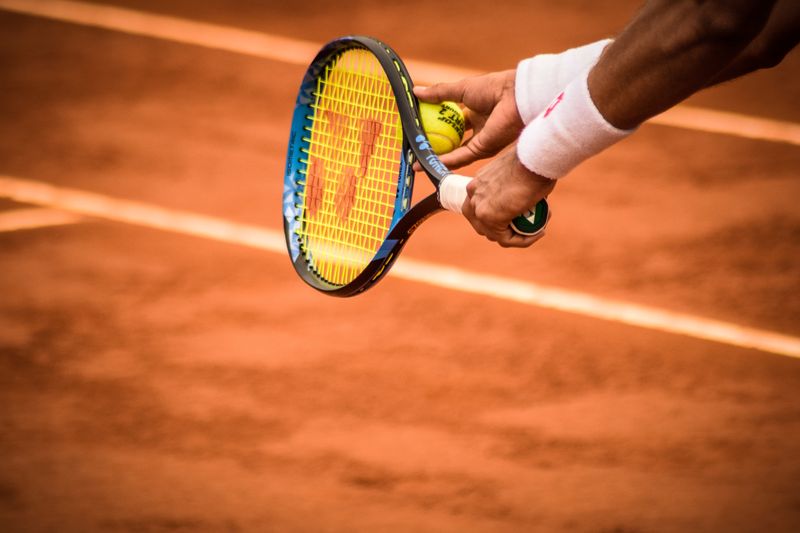
Third set, and the first serve is down ten kilometres an hour. The commentary says his arm is tired. His arm is fine.
A serve is a sequence that starts on the ground. The legs push, the hips turn, the trunk uncoils, the shoulder follows, the arm and racket arrive last and fastest. Energy is passed up that chain, and the arm's contribution, though it is the visible part, is the smallest link by mass. What actually determines how much speed reaches the ball is how much the legs put in at the bottom and how well the timing holds.
Fatigue attacks that from the bottom. The muscles that drive a jump lose their fastest, most explosive fibres first, because those are the ones burning through their immediate fuel supply. So the leg drive gets shorter. The player leaves the ground less, and the contact point drops.
That drop is the tell. Contact height decides the angle available into the service box, and a serve struck a few centimetres lower has to be hit either slower or with more spin to clear the net and still land in. The velocity loss you see on the screen is often the player's own correction, not a failure of power. He is trading speed for margin because his geometry has worsened.
The knock-on is where injuries begin. A shoulder that receives less energy from below has to produce more of the racket speed itself if the player refuses to slow down, and that is exactly what a competitor does when he needs a hold at five all. So the arm takes over a job it was never the main provider of, at the point in the match where it is least fresh. The tissue at the front of the shoulder and the tendon of the biceps sit right in the firing line of that swap.
There is a coaching instinct to fix late-match serving by working the shoulder. I think it is backwards, and the evidence is on the ball-toss camera. Watch the contact height in game one and game twenty five. If it has fallen, the shoulder is a symptom and the legs are the story, and any amount of arm conditioning will just let a tired player hurt himself more efficiently.
📊 Community Poll
Is ice hockey the fastest team sport in the world?
Related Articles