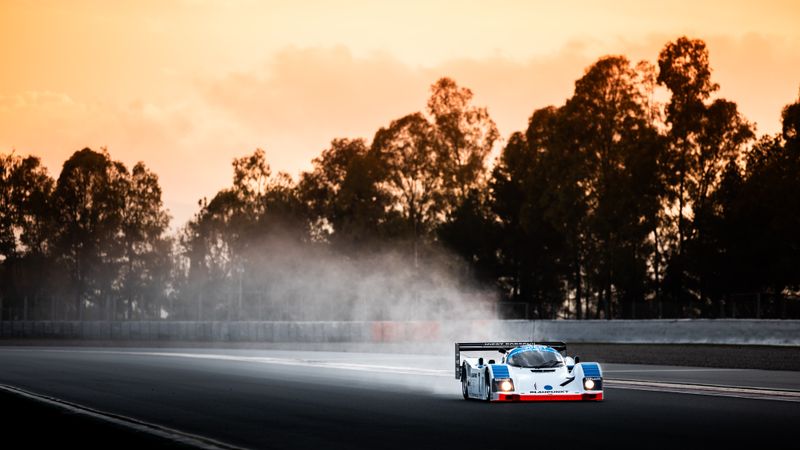
Racing on closed public roads produces a distinct kind of difficulty. The constraints are not simply that the track is narrow; the surface, the walls and the schedule each remove options that a purpose-built circuit provides.
Road surfaces offer less grip initially
Public roads are surfaced for durability and drainage rather than for adhesion, and they carry ordinary traffic for most of the year. Grip is consequently low at the start of an event.
Rubber laid down by successive sessions improves the surface progressively, so lap times fall substantially across a weekend. The track a driver learns on Friday is not the one they race.
Setup decisions must therefore anticipate conditions that do not yet exist. Teams calibrate for the expected end state rather than the observed one.
Uneven surfaces limit ride height
Roads contain camber changes, manhole covers and joins that a purpose-built circuit lacks. A car running very low will strike the surface repeatedly.
Raising the car protects it but reduces aerodynamic performance, since underbody downforce depends on proximity to the ground. Grip is sacrificed for survivability.
Suspension is softened for the same reason, which introduces body movement that upsets aerodynamic stability. Each protective adjustment costs performance elsewhere.
Walls remove the margin for error
Without run-off areas, a small mistake ends a session rather than costing a fraction of a second. Drivers must therefore build confidence gradually.
That changes how practice is used, with early laps spent establishing reference points rather than seeking pace. Track time is consumed by familiarisation.
Damage carries a heavy penalty because repairs consume the limited session time available. A single incident can compromise an entire weekend.
Braking and traction dominate lap time
Street circuits typically consist of straights joined by slow corners, so most time is gained under braking and on exit. High-speed aerodynamic performance matters less.
Mechanical grip from suspension and tyres therefore takes priority over aerodynamic configuration. Setup emphasis shifts towards traction out of slow corners.
Kerbs are used aggressively to shorten the racing line, which places further demand on suspension. Cars are set up to absorb impacts rather than to minimise them.
Why teams accept the difficulty
Street events bring racing into cities and reach audiences who would not travel to a distant circuit. The commercial argument is straightforward and consistent.
The unpredictability also produces varied results, since the compromises reward adaptability rather than outright car performance. Smaller teams score more often at such events.
For drivers, the precision required is a distinct challenge with its own reputation. Success at a street circuit is regarded as evidence of a particular kind of skill.